
How Contingency Search Can Accelerate Hiring in the Food Manufacturing Sector
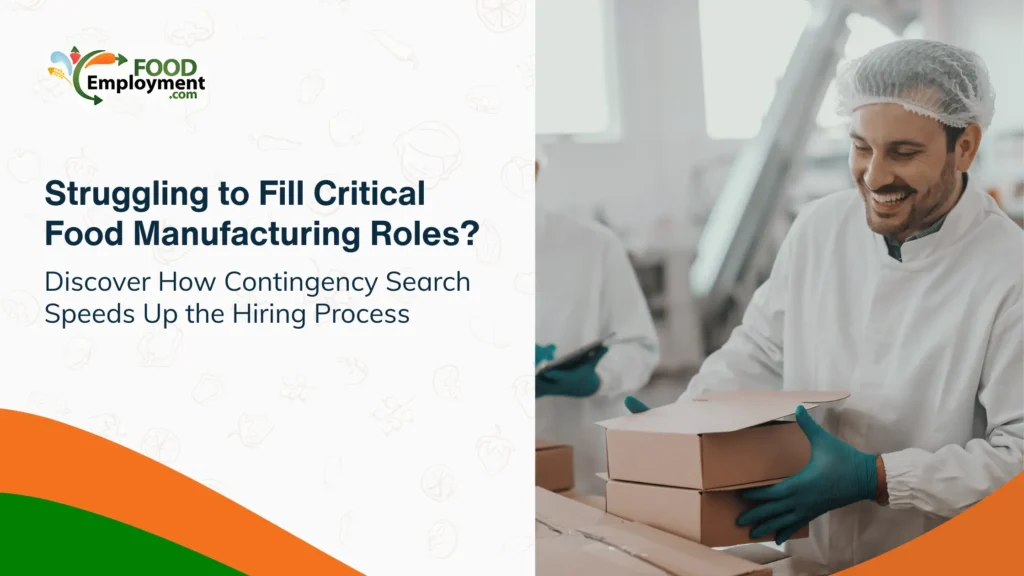
Hiring delays in food manufacturing rarely stay contained to HR. An open quality role can slow audits. A vacant maintenance position can halt production. A missing supervisor can push overtime costs through the roof.
For food manufacturers across the United States, speed matters. Yet many companies still rely on slow, reactive hiring processes that don’t match today’s labor market. That’s where contingency search comes in.
In this article, you’ll learn how contingency search works, why it fits the food manufacturing sector so well, and how it can significantly reduce time-to-hire without adding financial risk. You’ll also see where many employers get it wrong and how to avoid those mistakes.
What is Contingency Search and How Does it Work in Food Manufacturing?
Contingency search is a recruiting model where the employer only pays a fee if a hire is made. There are no upfront costs, retainers, or long-term commitments. Recruiters are compensated when they deliver results.
That structure changes behavior in important ways.
Because recruiters only get paid when a placement happens, they move quickly. Multiple recruiters may work on the same role at the same time, which creates competition and speeds up candidate sourcing.
In food manufacturing, where hiring needs are often urgent and plant-driven, that speed is a major advantage.
How Contingency Search Differs From Other Hiring Models
Most food manufacturers rely on a mix of internal recruiting, job boards, and referrals. These methods work well for some roles, but they can struggle when:
- The role is highly specialized
- The plant is in a rural or hard-to-reach location
- The position has been open for weeks or months
- Internal HR teams are stretched thin
Retained search, on the other hand, is typically slower and more expensive. It’s often reserved for executive-level roles and requires upfront fees, even if the search takes months.
Contingency search sits in the middle. It combines speed, flexibility, and industry expertise without locking employers into long contracts.
Hiring Challenges Unique to U.S. Food Manufacturing Plants
Food manufacturing hiring isn’t just “manufacturing hiring with different products.” It comes with challenges that require recruiters to understand the industry.
1. Labor Shortages and an Aging Workforce
Food manufacturing has faced labor shortages for years. A significant portion of the workforce is nearing retirement, while younger workers often gravitate toward roles that offer more flexibility. At the same time, food manufacturing plants compete with other manufacturing sectors, logistics companies, and the gig economy all drawing from the same limited talent pool.
According to U.S. food manufacturing labor shortage, workforce gaps have become a long-term structural challenge, driven by demographic shifts, declining applicant availability, and increasing production demand.
2. The Cost of Vacancy on the Production Floor
An unfilled role doesn’t just sit empty it creates ripple effects throughout the operation:
- Increased overtime and burnout
- Missed production targets
- Higher safety risks
- Strain on supervisors and team leads
Data from industry reports shows that labor shortages have already cost food manufacturers billions in lost production capacity, and every extra week a role stays open increases that risk. This idea is highlighted in food manufacturing vacancy and productivity risks ,which discusses how workforce gaps and vacancies directly impact productivity, safety, and operational efficiency.
3. Regulatory and Food Safety Pressures
Unlike many industries, food manufacturing hiring decisions are tied directly to compliance. Roles in quality, food safety, sanitation, and operations must align with requirements from organizations such as the U.S. Food and Drug Administration.
Recruiters and hiring managers without a solid understanding food manufacturing regulations and standards such as FSMA, Safe Quality Food (SQF), Hazard Analysis and Critical Control Points (HACCP), and audit readiness can inadvertently slow down hiring, create compliance risks, or overlook necessary qualifications for critical safety roles. Food manufacturers must fill positions that are directly linked to documentation, compliance audits, and safety system maintenance areas where regulatory knowledge is essential.
How Contingency Search Actually Speeds Up Hiring
Speed doesn’t come from cutting corners. It comes from removing bottlenecks.
1. Faster Access to Pre-Vetted Talent
Contingency recruiters who specialize in food manufacturing maintain active networks of professionals across QA, maintenance, operations, and leadership roles. Many of these candidates aren’t applying to job boards. They respond to recruiters who understand their background and plant environments.
That alone can shave weeks off the hiring timeline.
2. Parallel Recruiting, Not Sequential Efforts
Internal teams often source candidates one channel at a time. Contingency search flips that model.
Multiple recruiters work simultaneously. Candidates are screened before they reach your inbox. Interviews start sooner, and offers happen faster.
3. No Upfront Financial Risk
Because fees are only paid after a successful hire, companies can move quickly without worrying about sunk costs. That flexibility makes contingency search especially effective for urgent or high-impact roles.
Roles Where Contingency Search Delivers the Most Value
Not every role requires outside recruiting help. But contingency search shines in specific situations.
1. Hard-to-Fill and Specialized Positions
These roles often stall internal hiring efforts:
- Quality Assurance and Food Safety Managers
- Maintenance and Reliability Leaders
- Plant and Operations Managers
Recruiters who know the food industry can screen for certifications, audit experience, and plant readiness before a candidate ever reaches the interview stage.
2. Shift-Based and High-Turnover Roles
Supervisory and frontline leadership roles can be difficult to fill, especially for second and third shifts. Contingency recruiters understand these challenges and set expectations early, which reduces offer declines later.
3. Growth, Expansion, and Turnaround Hiring
New production lines, plant expansions, and leadership changes create time-sensitive hiring needs. Contingency search provides the flexibility to scale recruiting efforts without overloading internal teams.
Best Practices for Working With a Contingency Search Partner
The model works best when both sides move with intention.
1. Be Clear About What the Role Really Requires
Vague job descriptions slow everything down. The fastest searches happen when employers clearly define:
- Required certifications and experience
- Shift schedules and plant conditions
- Compensation ranges
Transparency reduces mismatches and speeds up decision-making.
2. Move Quickly on Qualified Candidates
In a competitive market, strong candidates rarely wait. Delayed feedback or long approval chains often result in lost talent.
Fast hiring requires alignment between HR, operations, and leadership.
3. Treat Recruiters as Partners
Recruiters perform better when they understand your plant culture, team dynamics, and expectations. Sharing that context helps them represent your role accurately and attract better-fit candidates.
Common Mistakes Food Manufacturers Make With Contingency Search
Even a strong recruiting model can fail if it’s misused.
One common mistake is working with too many recruiters without coordination. This can confuse candidates and dilute your employer brand.
Another is underestimating the cost of delay. Waiting “just one more week” often leads to longer vacancies, not better hires.
Finally, some companies aren’t internally prepared for fast hiring. If interview scheduling or approvals stall, the advantage of contingency search disappears
Frequently Asked Questions
Q. How fast can contingency search fill roles?
While timelines vary, contingency searches often reduce time-to-hire by weeks compared to traditional methods, especially for mid-level and leadership roles.
Q. Is contingency search only for executive positions?
No. While it’s effective for leadership roles, contingency search is widely used for quality, maintenance, operations, and supervisory positions.
Q. How are recruiter fees structured?
Fees are typically a percentage of the hired candidate’s first-year salary and are only paid once the hire starts.
Q. Can contingency search help with rural plant locations?
Yes. Recruiters often have access to candidates willing to relocate or commute, which job boards alone may not reach.
Conclusion: Turn Hiring Speed Into a Competitive Advantage
Slow hiring costs more than most food manufacturers realize. It affects production, safety, morale, and long-term growth.
Contingency search offers a practical way to accelerate hiring without increasing risk. When used correctly, it shortens time-to-hire, expands access to qualified talent, and supports the operational demands unique to food manufacturing.
If your team is struggling with hard-to-fill roles or urgent hiring needs, contingency search may be the missing piece.


